Technology Trials
We are testing AI-enabled, autonomous, and precision weed control technologies on commercial farms in Queensland and Victoria.
Real conditions. Independent evidence. Results growers can use.
Explore the equipment currently being trialled, the conditions, and the results so far below.
Carbon Robotics LaserWeeder™
Laser / Thermal
Trial Locations
> Bacchus Marsh and Boisdale, Victoria (Tripod Farming Group)
> Kalbar, Queensland (FarmTech Australia)
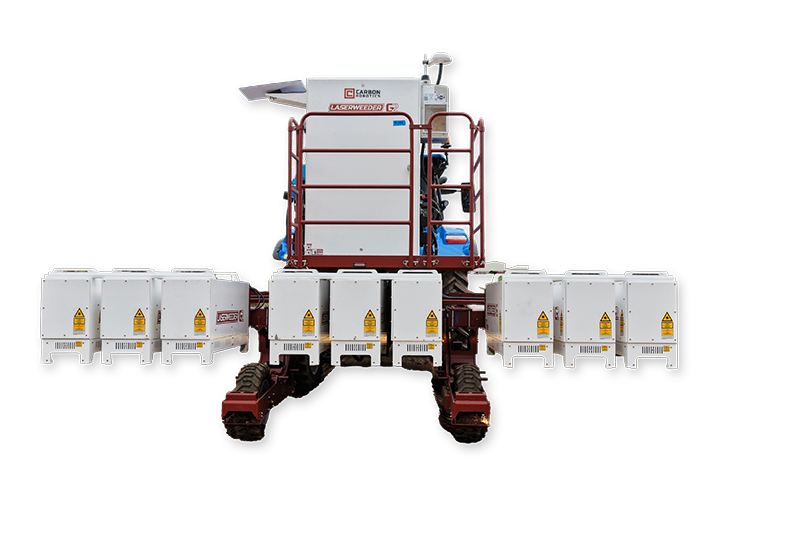
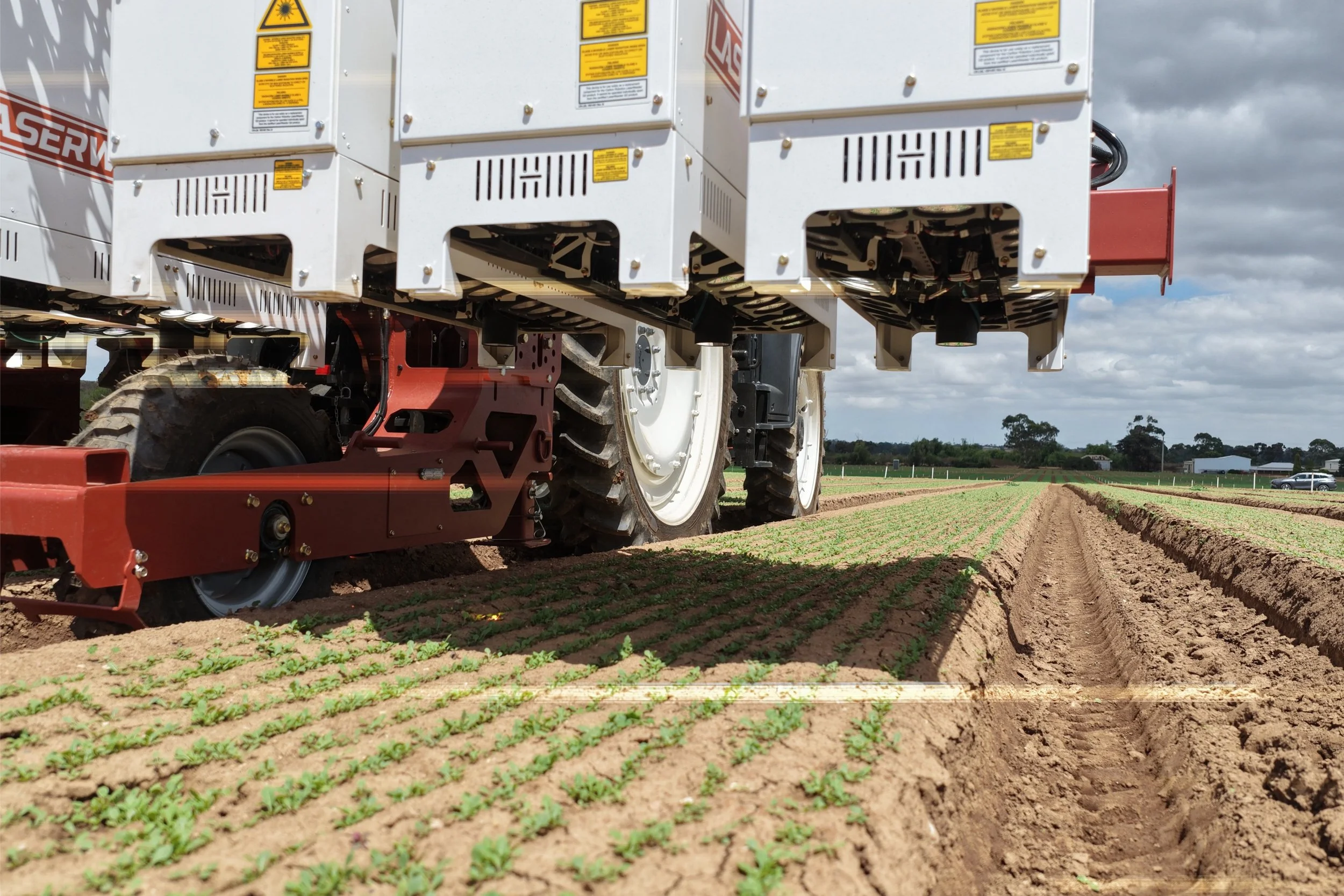
The LaserWeeder™ uses high-powered lasers guided by AI and high-speed camera imaging to kill weeds without touching the crop or applying any chemical. It identifies weeds in milliseconds and fires a precision laser pulse at each one. The machine can operate day and night and works across a range of weather conditions.
The Generation 1 model is running at Boisdale, Victoria, and the Generation 2 model is being tested in Bacchus Marsh, Victoria and Kalbar, Queensland.
-
AI vision identifies weeds and distinguishes them from crop plants in real time
A laser pulse kills each weed at cell level with no herbicide and no soil disturbance
Operates day and night across varying weather conditions
RTK GPS tractors guide the machine and log field coverage and weed density data, along with providing heat maps
Data from each pass is recorded automatically for performance monitoring. This information can be pulled from Carbon Ops Center which is the platform used to track data from the field with the LaserWeeder.
-
Short-cycle crops including but not limited to babyleaf, spinach, rocket and lettuce - the LaserWeeder™ has weeded around 40-crops across ANZ and around 130-crops globally
Organic and low-chemical production systems
Farms looking to significantly reduce or replace hand weeding crews and reduce herbicide use
Farms facing reduced herbicide effectiveness and increasing resistance
Operations with defined bed layouts – Carbon Robotics offers form factors from 2m to 6m, with wheel spacing from 1.5m to 3m, to suit different farm sizes, bed/irrigation configurations and budgets
-
At Tripod Farming Group's Victorian sites, the machine is being evaluated across babyleaf spinach, rocket and head lettuce crops. Common weeds at the Victorian sites include grass weeds, nettles, and a range of broadleaf annual weeds typical of intensive leafy crop production.
At FarmTech Australia's Kalbar site in Queensland, trials are underway targeting melon paddy, pig weed, nut grass, and stramonium, with specific trials being done on nutgrass -
The LaserWeeder™ is the most data-rich technology in the project to date. Early findings in Victoria have been positive.
Approximately half a million weeds are killed per 8-hour shift on average
Hand weeding labour has been reduced by 75%
Pre-emergent herbicide use has been reduced by 25%
Post-emergent herbicides have been discontinued at the trial site entirely
Metham Sodium (a soil fumigant) has been discontinued at the trial site entirely
Soil nutrient availability is improving as weed competition reduces. Crop quality impacts are being monitored and will be quantified as data accumulates.
Early findings from trial data at Kalbar, SE Queensland demonstrates variations:
Average coverage rate of 0.17Ha/HR
Approximately quarter of a million weeds are killed per 8-hour shift (avg weed radius of 23.2mm, weed density of 16.2/m2
General findings so far:
Equipment speed can be relative to weed density and radius.
Growers using the LaserWeeder find the algorithm to be powerful and highly responsive. Any missed weeds can be added to the image database quickly and easily.
The Carbon Robotics team have offered provided high levels of service with 24/7 remote support and region-based technicians across Australia.
-
Based on our experience so far, these are the questions we would encourage any grower to raise with manufacturers or advisers before committing.
How does the machine perform on the specific weed species present on your farm, particularly grass weeds and tougher broadleaf species
How does ongoing service affect your ROI calculations
How might this equipment interact with irrigation and headland infrastructure?
What are the transport requirements between paddocks or blocks, and are road permits or pilot vehicles required in your region?
How does machine weight affect performance during wet weather or on heavier soil types?
What does the software subscription cover, how often are algorithm updates delivered, and how are local weed species incorporated into training data?
What local service and technical support is available in your region, and what is the expected response time for issues?
What GPS and RTK infrastructure needs to be in place before the machine will operate effectively?
Ecorobotix ARA Ultra-High Precision Sprayer
Chemical / Precision spray
Trial Locations
> Lockyer Valley, SE Queensland (FarmTech Australia)
> Fassifern Valley, SE Queensland (FarmTech Australia)
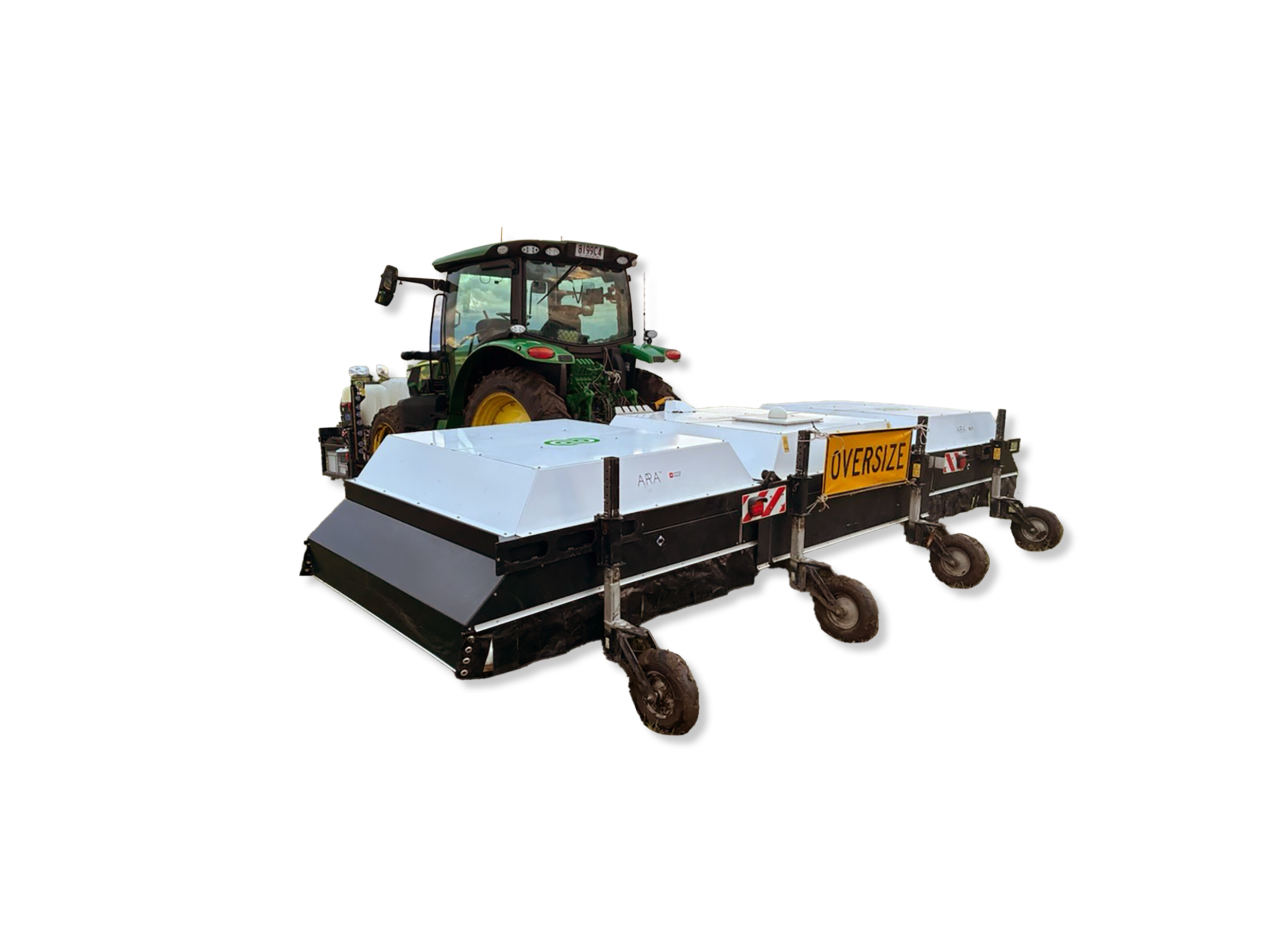
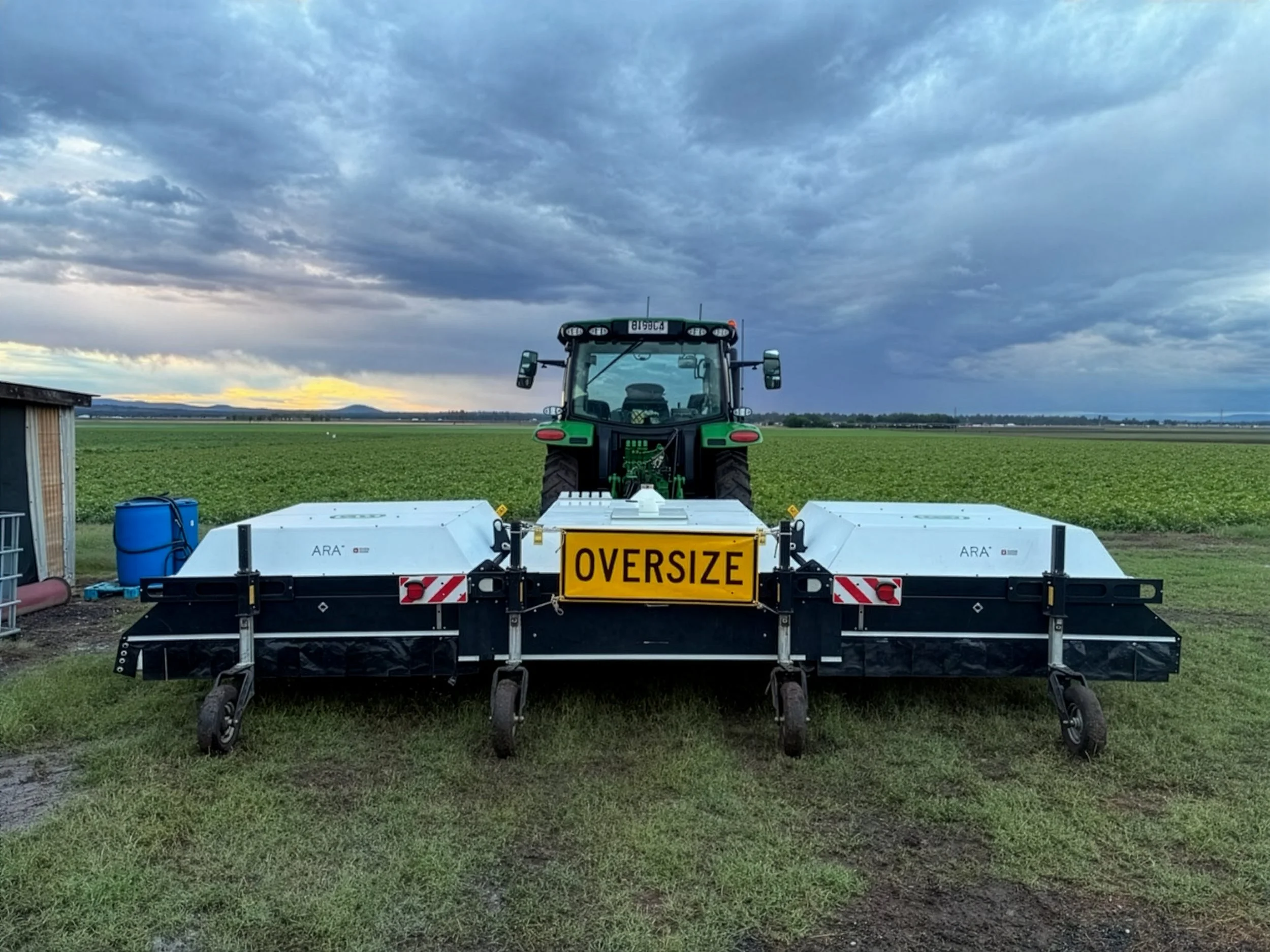
The Ecorobotix ARA™ sprayer uses Plant-by-Plant Al™ (Artificial Intelligence) and computer vision to detect weeds in real time.Applying herbicides with ultra-high precision, the machine targets only the weed, leaving the surrounding crop and soil untouched.
Individual nozzles fire with precision, achieving a 6x6cm spot spray, and configurations can vary: spray only targeted weeds, blanket spray a row, spray everything except the crop or spray the crop itself.
The system is tractor-mounted via a 3-point hitch (front and rear), requires hydraulic connection and PTO, and needs a minimum of 90hp to operate.
It can apply herbicides, insecticides, fungicides, and fertilisers, making it relevant beyond weed control for targeted pest and disease management as well.
-
Cameras and Plant-by-Plant Al™ identify individual weeds in real time as the machine travels
Independent nozzles apply chemicals with ultra-high precision to each target, treating only the target and not the surrounding area.
Can apply herbicide, insecticide, or fungicide depending on the task
-
Broadacre vegetable systems with plant spacings bigger than 40mm, including beans, sweet corn, onions and brassicas - See this link to view all
Operations looking to significantly reduce total herbicide volume applied
Farms wanting more precise control of targeted pest and disease applications
Operations with existing spray programs looking to improve application accuracy
-
Trials are underway across FarmTech Australia's Lockyer Valley and Fassifern Valley sites in SE Queensland.
Common weeds at these sites include nutgrass, ryegrass, pigweed, thorny apple, volunteer potatoes, and a range of other region and crop-specific weeds that vary by site and season.
The Ecorobotix has been run commercially in onions, broccoli, mung beans, green beans, carrots, pumpkins, cabbages and in fallow.
-
The SE Queensland unit is operational and has completed extensive field use. Formal quantified results are being collected under the current trial phase and will be published in due course.
Early results are showing significant promise, with performance varying by spray rate and local weed conditions
As of May 2026, 1309Ha in 806 hours, 1.23 Ha/hr seasonal average.
313,513 litres of spray mix saved, the equivalent of 1045Ha.
Trial results have demonstrated a 79.8% chemical savings (corroborating the manufacturers claim of 80%).
Ongoing work on algorithm improvements for Australian conditions including reliability and precision.
Trials exploring new spot straying techniques are showing early promise in broccoli thinning applications.
“The ARA has been transformative for weed management. We can’t go back to conventional spraying after this.” ~ Luke Nelson, FarmTech
-
Has the machine's algorithm been trained on the specific weed species and crops present on your farm, and what is the process for requesting localised algorithm development?
What spray rate settings are recommended for your weed species mix, and how does performance vary between weed types and growth stages?
What equipment does the machine require to function, and what are the compatibility requirements for an existing fleet?
What boom width options are available, and are wider-boom models available for operations requiring greater coverage rates?
What level of on-farm technical support and remote diagnostics does the manufacturer provide in Australia? What is the expected response time for issues?
What are the spot spray configurations or rates?
What are the annual licence and software subscription costs, and what do they cover?
What GPS and RTK infrastructure needs to be in place before the machine will operate effectively?
FarmDroid
Mechanical
Trial Locations
> Lockyer Valley, SE Queensland (FarmTech Australia)
> Fassifern Valley, SE Queensland (FarmTech Australia)
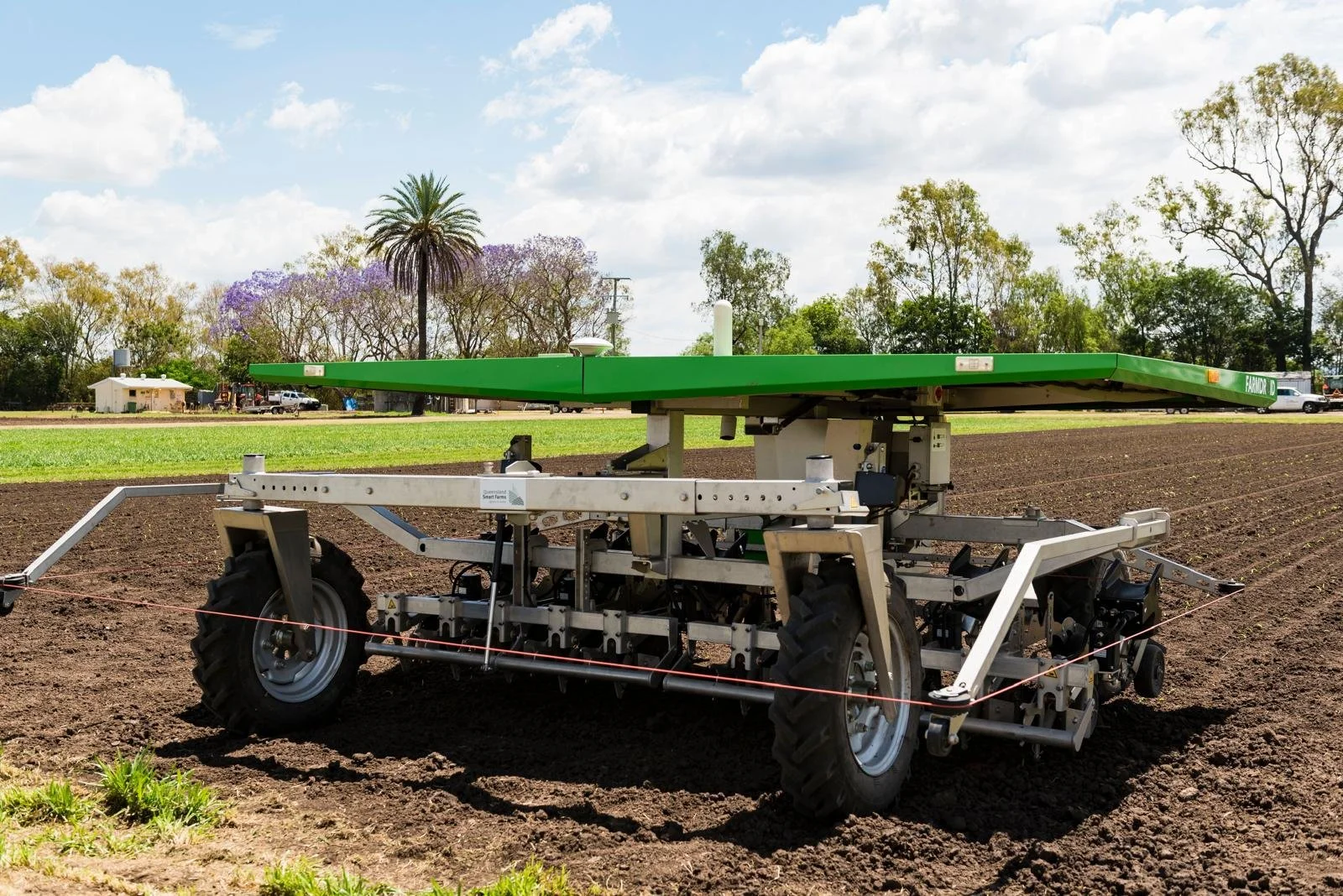
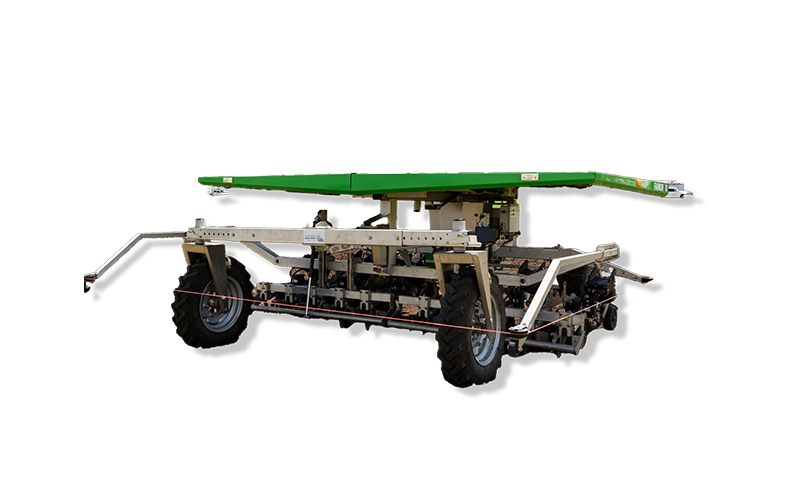
FarmDroid is a solar-powered autonomous robot that plants seeds with RTK GPS precision and mechanically controls weeds between and around each crop plant, without herbicide.
Because it records the exact location of every seed at planting, it can return later and remove weeds that emerge nearby, identifying crop from weed by position rather than by vision.
The machine can also be fitted with a spot-spray attachment for targeted pesticide, herbicide, or fertiliser applications.
The project is evaluating FarmDroid across small-seeded crops including broccoli, cauliflower and lettuce, with large-seeded crop trials for beans, sweet corn and pumpkin planned as the newer model is delivered
-
RTK GPS records the exact location of each seed at the point of planting
The machine returns autonomously and mechanically weeds around each crop plant
Solar-powered with no fuel costs and fully autonomous field operation
Optional spot-spray attachment for targeted herbicide, insecticide or fungicide
Lightweight design causes less soil compaction than conventional tractor-mounted equipment
-
Direct-seeded small crops including brassicas, lettuce, onion and carrot
Operations seeking chemical-free mechanical weed control between and within rows
Farms looking to reduce or replace transplanting costs through direct seeding
Systems where seedling establishment is a significant cost per hectare
-
Trials are underway across FarmTech Australia's Lockyer Valley and Fassifern Valley sites in SE Queensland. Common weeds at these sites include nutgrass, ryegrass, pigweed, thorny apple, volunteer potatoes, and a range of other region and crop-specific weeds that vary by site and season.
-
FarmDroid FD20 small-seed machines are operational at SE Queensland sites. Formal project trial results for the large-seed model are pending delivery of equipment.
The small-seed FD20 machines are operational and being used across broccoli, cauliflower, lettuce, onion and carrot crops
Running at 0.28Ha/hr
The position-based approach to weed identification is showing potential in conditions where camera-based systems face limitations
FarmTech Australia's team report the machine is a powerful tool for precision planting and crop establishment. When used appropriately, it is incredibly efficient.
The large-seed model covering beans, sweet corn and pumpkin was released in early 2026. Scheduling with the manufacturer is underway. Formal evaluation reports are expected in 2027.
-
What is the direct-seeding strike rate for the specific crops you intend to grow, and how does this compare to transplanted seedling establishment under your conditions?
How does the mechanical weeding implement perform on the specific weed species present at your site, including tougher or deep-rooted species?
What does sufficient ground preparation look like (eg. soil conditions, organic matter)
What are the RTK GPS accuracy requirements, and does your existing farm infrastructure meet them?
What local service and parts availability exists in Australia, and what are the typical response times for technical support?
How well does the unit work with raised bed systems?
What are the ongoing subscription, maintenance and parts costs, and have these changed recently?
What row spacing and bed configuration adjustments are needed to integrate FarmDroid into farming systems?